Cross-Game Data Integration Shapes Personalized Promotions Across Slots and Roulette Platforms
Written by Felix Weber · Aug 3, 2026

Cross-Game Data Integration Shapes Personalized Promotions Across Slots and Roulette Platforms
Platforms that host both slot machines and roulette variants collect player activity across these formats, then share the resulting datasets to refine promotional offers in real time, and this practice has expanded steadily through mid-2026 as operators seek tighter alignment between user behavior and reward structures.
Data Flows Between Reel and Wheel Games
Operators record metrics such as session length, bet frequency, and volatility tolerance from slots, then merge those records with roulette data on wheel selection patterns and side-bet activity, so the combined profile informs which bonus credits, free-spin bundles, or cashback percentages reach each account. Researchers at the University of Nevada, Reno documented how such merged datasets allow systems to predict when a slots-heavy player might respond to a roulette-specific multiplier, and similar patterns appear in reports issued by the New Jersey Division of Gaming Enforcement during the first half of 2026.
Integration occurs through centralized loyalty engines that tag every wager with a unique identifier, while algorithms compare historical cross-game sequences against current login behavior, and the output triggers offers calibrated to the player's most recent activity cluster. One study released by iGaming Ontario in August 2026 tracked 1.2 million accounts over six months and found that players exposed to cross-game offers showed a 14 percent higher redemption rate than those receiving single-game promotions only.
Personalization Mechanisms in Action
Promotional engines segment users into clusters based on shared metrics rather than isolated game performance, so a participant who alternates between high-volatility slots and European roulette might receive a tiered offer that begins with slot free spins and converts remaining value into roulette chip bonuses if certain thresholds are met. Data pipelines update these clusters hourly, which lets operators adjust offer depth according to live balance trends and recent deposit velocity.
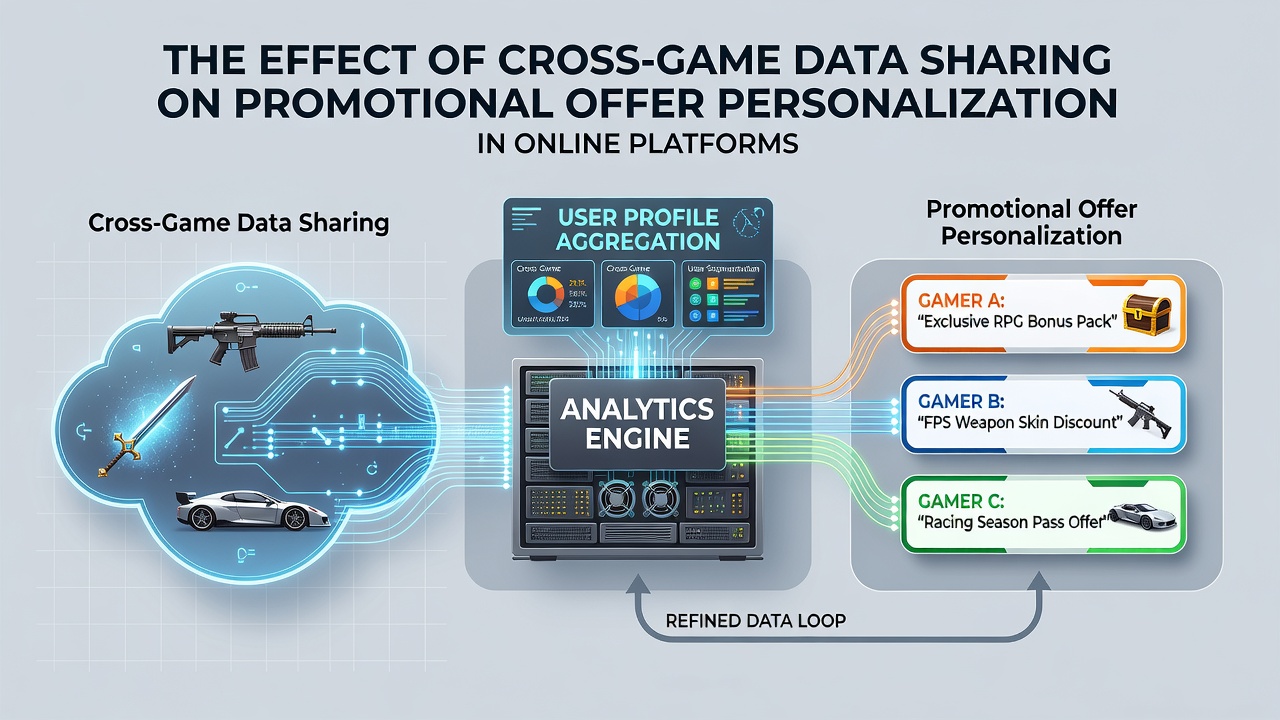
Those who have examined loyalty program logs note that cross-game signals often surface during periods of declining engagement, and operators respond by surfacing hybrid rewards that bridge the two formats instead of pushing one game exclusively. Figures released by the Australian Communications and Media Authority indicate that platforms adopting this approach recorded a 9 percent lift in monthly active users during the 2025-2026 fiscal year, with the largest gains appearing among accounts that had previously shown fragmented play across reel and table products.
Observed Outcomes in Regulated Markets
Regulators in multiple jurisdictions track how shared data influences offer timing and value, and early findings suggest that players receive fewer redundant promotions when systems recognize prior engagement in either format. For instance, an account that exhausted a slots bonus within the past 48 hours is less likely to see another slots-only reward and more likely to receive a roulette cashback incentive calibrated to average bet size across both categories.
Industry reports compiled by the European Gaming and Betting Association highlight that operators using unified data layers reduced promotional spend waste by an average of 11 percent in the twelve months ending June 2026. The same datasets also allow platforms to test offer variants across matched user groups, revealing which combinations sustain longer play sessions without increasing regulatory exposure.
Technical and Compliance Considerations
Platforms must maintain audit trails that separate raw game data from derived promotional triggers, and compliance teams review these trails to confirm that personalization does not inadvertently favor one game category over another in restricted markets. Technical teams implement consent flags at the account level so players can opt out of cross-game sharing, and systems log every instance where an offer references data from both slots and roulette to support later regulatory queries.
Observers note that August 2026 updates to several state-level reporting frameworks now require operators to disclose the percentage of offers generated through cross-game models, which has prompted further refinement of segmentation rules. Those refinements include additional weighting for session recency and exclusion of dormant accounts from automated personalization flows.
Conclusion
Cross-game data sharing continues to influence how online platforms structure promotional offers for slots and roulette participants, with measurable effects on redemption rates, user retention, and compliance documentation. As regulatory bodies in North America, Europe, and Australia refine their oversight of these systems, operators adjust their integration methods to balance personalization efficiency with transparency requirements. The practice remains a core component of loyalty engineering in multi-format environments, supported by ongoing data collection and periodic third-party audits.